  • Home
  • Weather
  • Climate
  • Ocean & Coasts
  • Fisheries
  • Satellites
  • Research
  • Marine & Aviation
  • Charting
  • Sanctuaries
  • Education
  • News and features
  • Our data
  • Tools & resources
  • About our agency
U.S. flag

An official website of the United States government

Here’s how you know

Dot gov

Official websites use .gov
A .gov website belongs to an official government organization in the United States.

HTTPS

Secure .gov websites use HTTPS
A lock (LockA locked padlock) or https:// means you’ve safely connected to the .gov website. Share sensitive information only on official, secure websites.

Find your local weather
Change location:
  • News
  • Data
  • Tools
  • About
 
 
NOAA mobile logo
NOAA logo National Oceanic and Atmospheric Administration U.S. Department of Commerce


Breadcrumb

  1. Home
Getty Images. Illustration showing people working together to care for the Earth.

Earth Day

More for Earth Month

Marine debris: What it is, where it comes from and how it impacts our world
Video: What is the carbon cycle?
Join us: Citizen science at NOAA
Tiny tutorials: Get started using Earth science data in seconds

News from around NOAA

Science that goes deep: How NOAA Research is studying our global ocean
Access to NOAA’s world-renowned Mauna Loa Observatory restored
NOAA research offers roadmap to improve West Nile virus forecasts, prevention
View all

More for Earth Month

Marine debris: What it is, where it comes from and how it impacts our world
Video: What is the carbon cycle?
Join us: Citizen science at NOAA
Tiny tutorials: Get started using Earth science data in seconds

News from around NOAA

Science that goes deep: How NOAA Research is studying our global ocean
Access to NOAA’s world-renowned Mauna Loa Observatory restored
NOAA research offers roadmap to improve West Nile virus forecasts, prevention
View all
The golden orb specimen, being held by a person with blue rubber gloves, in the lab at the Smithsonian Institute.
Scientists reveal identity of mysterious ‘golden orb’ collected during NOAA expedition
An artist's rendering of the GOES-U satellite in space, with the Earth to its left and the Sun to its right.
Our planet, our home: Prospectives of Earth from space
Earth Day image - Earth in water drop on a leaf.
When was the first Earth Day?
An X9 flare, which can be seen in the lower half of the sun, captured by GOES-19’s Solar Ultraviolet Imager (SUVI) instrument on Oct. 3, 2024.
5 historically huge solar events you have to see to believe

April is #EarthMonth and #CitizenScience Month!

How is NOAA addressing climate change, extreme weather, pollution and more? How can you make a difference? Explore our Earth Day portal to find out! 

Be sure to check back throughout the month of April for the best of Earth-science related news, features and educational resources.


Features across NOAA

Infographic showing ten things you can do to protect the earth.
Protecting our planet starts with you: 10 simple choices for a healthier Earth

These are real things you can do to make a difference in our world.

A collage of images, including a teen standing in a stream wearing hip waters and giving a thumbs-up, a horseshoe crab, four green sea turtles on a beach, and a person standing in front of a large outdoor sign that says "Aloha."
Citizen scientists wanted: Find a project that's right for you

Whether you’re outdoors or at home, you can be a part of NOAA’s world-class research and monitoring efforts.

Two smiling children transplanting plants on the beach.
Small actions, big impact: Get involved in your national marine sanctuaries

The names of NOAA’s 17 national marine sanctuaries and two marine national monuments reflect shared history and culture. 

For teachers and students
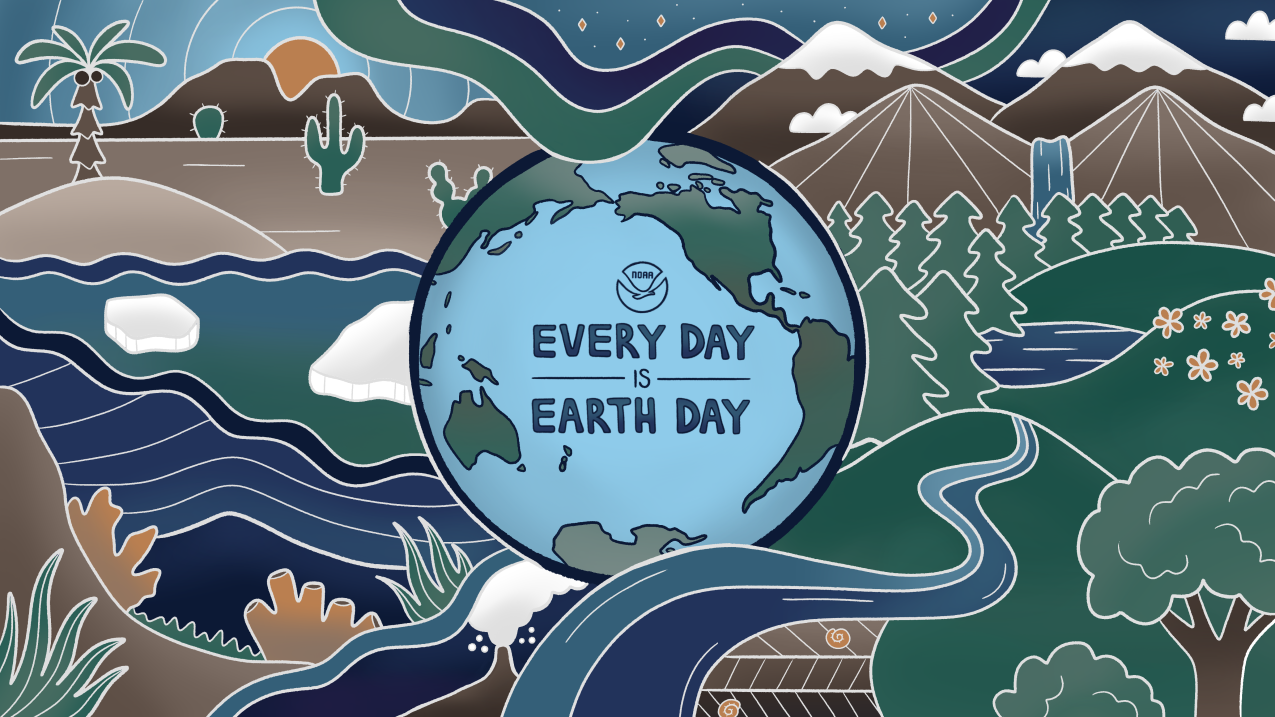
A doodled graphic of the Earth with the text “Every day is Earth Day” on it. The Earth is surrounded by drawings of nature including a desert, tropics, tundra, marine and deep sea environments, mountains, forests, rivers, and hills.
Earth Day art to color, download, and share

A fun and memorable way to enjoy Earth Day

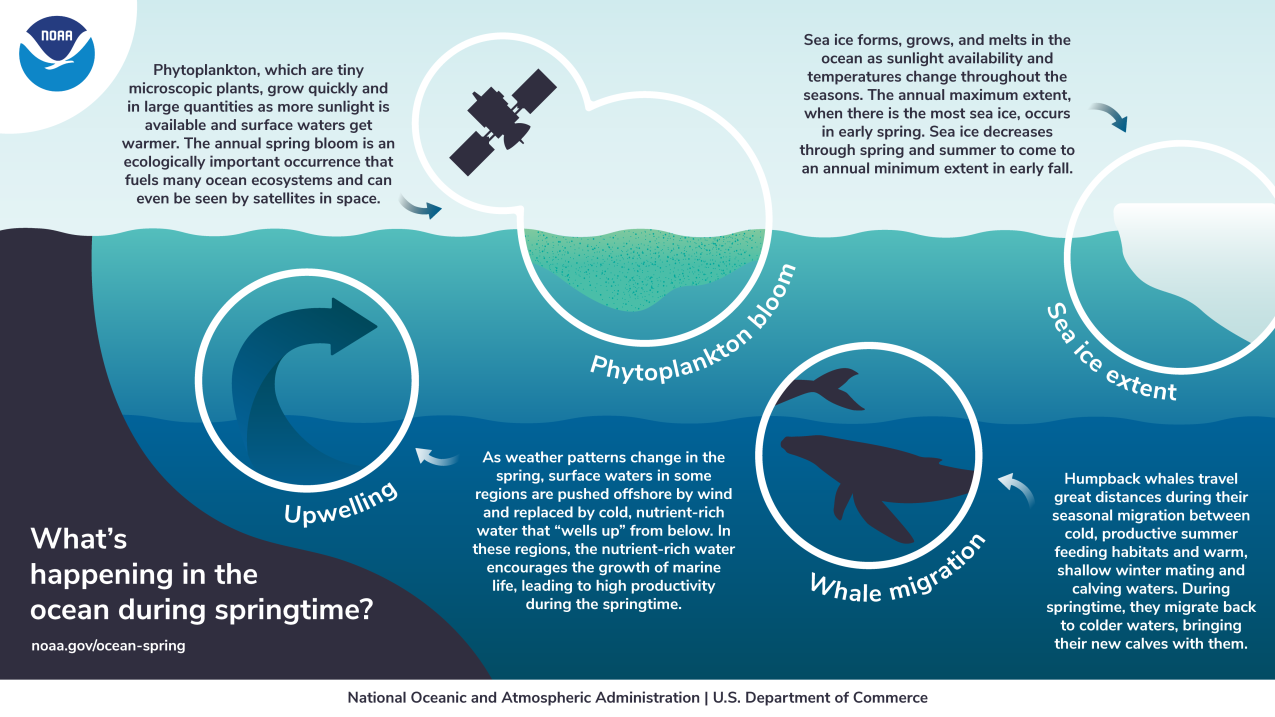
 Diagram of the ocean that shows upwelling, a plankton bloom, sea ice, humpback whale migration. Read the narrative at www.noaa.gov/education/infographic/what-happens-in-ocean-in-springtime.
Infographic: What's happening in the ocean in spring?

Though you might not notice it, ocean life move to a new tempo in spring.

TRASK TALK: Special Feature.
Deep sea discoveries, fish school and more: Watch our Earth Day video collection!

From "Trash Talk" to a coral comeback, enjoy our Earth Day-themed videos.


ON SOCIAL: Follow @NOAA’s Earth Month coverage on BlueSky, Instagram, X and Facebook using the hashtags  #EarthDayNOAA and #EarthDay2026. And stay connected by joining our many social media communities.

More for Earth Month

Marine debris: What it is, where it comes from and how it impacts our world
Video: What is the carbon cycle?
Join us: Citizen science at NOAA
Tiny tutorials: Get started using Earth science data in seconds

News from around NOAA

Science that goes deep: How NOAA Research is studying our global ocean
Access to NOAA’s world-renowned Mauna Loa Observatory restored
NOAA research offers roadmap to improve West Nile virus forecasts, prevention
View all

Select Citation Format

Last updated June 1, 2026
Cite this page
Have a comment on this page? Let us know.
NOAA Home
Science. Service. Stewardship.
  • News
  • Tools
  • About
  • Resources for Tribal & Indigenous Communities
  • Bipartisan Infrastructure Law (BIL)
  • Inflation Reduction Act (IRA)
  • Protecting Your Privacy
  • FOIA
  • Information Quality
  • Accessibility
  • Guidance
  • Budget & Performance
  • Disclaimer
  • EEO
  • No-Fear Act
  • USA.gov
  • Ready.gov
  • Employee Check-In
  • Staff Directory
  • Contact Us
  • Need Help?
  • COVID-19 hub for NOAA personnel offsite link
  • Vote.gov
Stay connected to NOAA
NOAA on Twitter NOAA on Facebook NOAA on Instagram NOAA on YouTube
Back to top